
A nonprofit’s guide to website navigation (and how to prepare your team for the discussion)
Most nonprofit websites have navigation built around how the organization thinks about itself, not how visitors actually use it. Here's…

Let’s be real—your website is probably the last thing on your mind when you’re busy organizing meetings and responding to community needs. I hear it all the time: “Our website doesn’t reflect the powerful work we’re actually doing.” You’re showing up for your mission, and your digital presence is just one more ball you’re trying to keep in the air.
After working with dozens of community organizers and small nonprofits, I’ve noticed some common website challenges that many of us face. These aren’t mistakes—they’re natural outcomes of trying to do important work with limited time, budget, and technical support. If any of these sound familiar, you’re not alone. Let’s explore some practical ways to address these challenges without expensive consultants or technical expertise.
Your organization does important, multifaceted work, and you want your website to showcase it all. This comes from a good place—pride in your programs and a desire to be transparent about everything you do. But sometimes this can create an overwhelming experience for first-time visitors.
The impact: When visitors face too many options and information, they might struggle to find what they’re looking for or understand your core purpose. This can make it harder for potential supporters to take meaningful action.
A practical approach: Consider focusing your homepage on a clear, welcoming headline that summarizes your mission. You don’t need to scrap all your content—just prioritize it! Limit your main navigation to 5-7 clear options, and highlight your core programs first. Remember, even small changes can make a big difference in how people understand your work.
When we’re deeply involved in our work, we often describe it in terms of activities and processes—the workshops we conduct, the meetings we host, the services we provide. This is completely natural since these activities fill our days and represent our hard work.
The impact: Sometimes focusing on activities alone makes it harder for newcomers to understand the transformative change you’re creating in your community.
A practical approach: For each program or service, try adding a brief impact statement alongside your description of activities. For example, you might mention how many people benefited, what changed in your community, or share a brief outcome. This helps newcomers quickly understand why your work matters, while still honoring all the important activities you do.
When building a website, it’s common to use standard button text like “Learn More,” “Click Here,” or “Submit.” These phrases come built into many templates, and they seem neutral and safe when you’re trying to appeal to everyone.
The impact: Generic button text might not fully convey the meaningfulness of getting involved with your organization or the specific action someone is taking.
A practical approach: Consider refreshing your button text with more specific, action-oriented phrases that better reflect your work. Here are some ideas:
| Instead of | You Might Try |
| “Learn More” | “See Our Impact” |
| “Click Here” | “Join Our Community” |
| “Submit” | “Become a Volunteer” |
| “Download” | “Get Your Free Guide” |
| “Contact Us” | “Talk to an Organizer” |
| “Sign Up” | “Stay Connected” |
| “More Information” | “Discover How We Help” |
| “Register” | “Reserve Your Spot” |
Try making your most important buttons stand out visually with a contrasting color. If possible, include the same action button (like “Donate” or “Volunteer”) in both your main header section and again toward the bottom of your page for convenience.
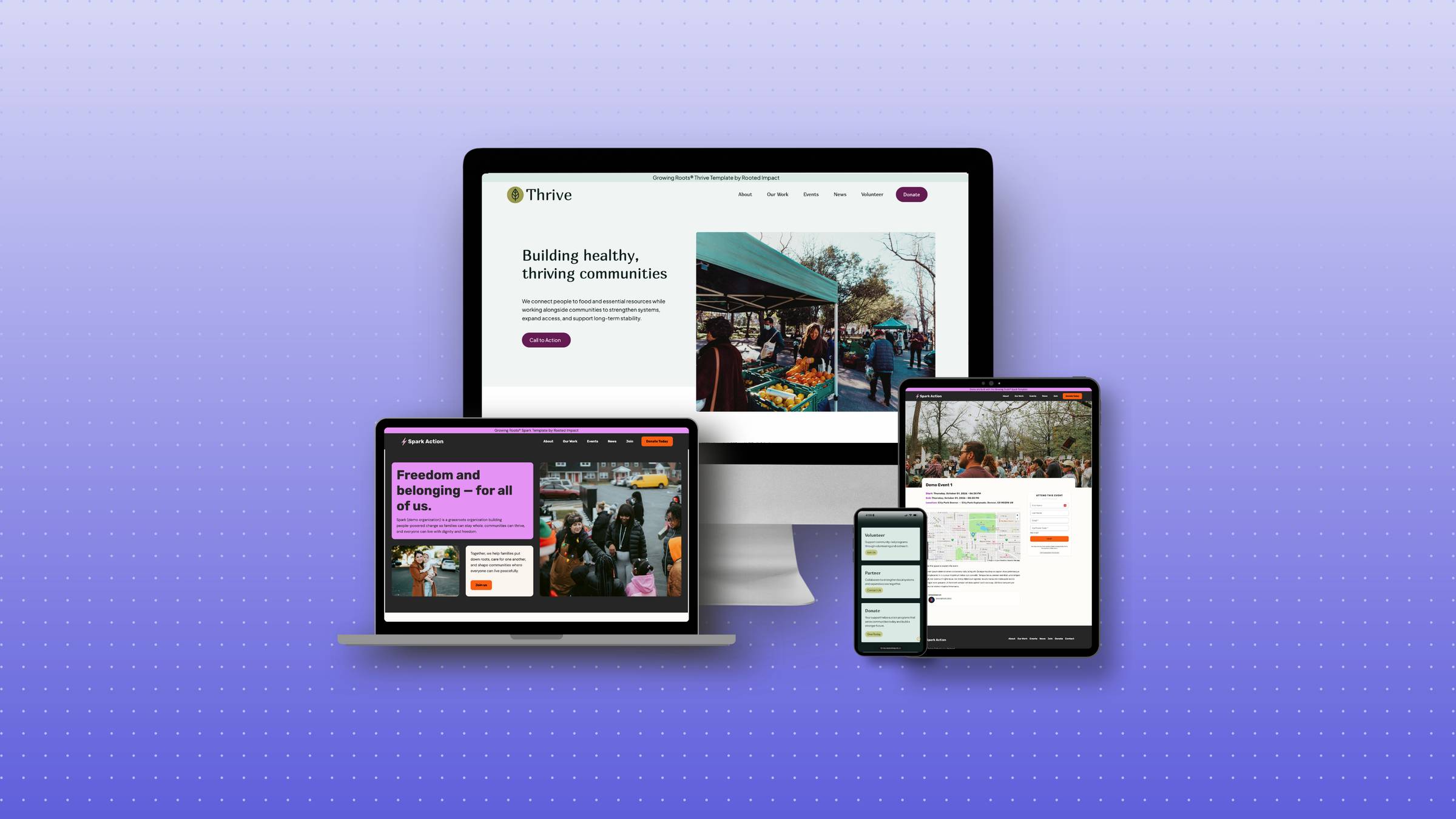
With limited time and resources, many organizations understandably use standard website templates without much customization. This is a perfectly reasonable approach when you’re juggling multiple priorities!
The impact: Sometimes, standard templates might not fully reflect the unique spirit and character of your community-centered work.
A practical approach: Even small customizations can help your website better reflect your organization’s values. If possible, update colors to match your logo or materials. Use authentic photos from your programs if you have them. If professional photos aren’t available right now, simple solid color backgrounds with clear text can actually work better than stock photos. Remember that authenticity matters more than perfection.
When building a website, it’s natural to want to give equal space to all your programs and initiatives—everything your organization does is important. This comes from a place of valuing all aspects of your work.
The impact: When everything has the same visual weight, visitors might not notice time-sensitive campaigns or your most pressing current priorities.
A practical approach: Consider creating a featured section on your homepage for your most timely initiative or current priority. This doesn’t diminish your other work—it simply helps guide visitors toward immediate ways to engage. Make this section visually distinct with a different background color or border, and pair it with a clear call-to-action. This creates a helpful focal point for visitors who want to support your current efforts.
Remember, you don’t need to tackle everything at once. Even one or two small improvements can make your website more effective. The fact that you have a website at all is already an achievement when you’re balancing so many responsibilities!
The real impact of your organization happens in your community work—your website is just one way to invite more people in. Start where you are, use what you have, and know that your efforts to communicate your mission online are valuable, even when resources are limited.
Want more personalized guidance? Join Our Digital Roots Workshop: Fix Your Homepage, Grow Your Impact on June 25th
Do you feel unsure about your homepage, are overwhelmed by design tools, and frustrated that your site doesn’t reflect the depth of your mission?
You’ll walk away with a clear and powerful homepage layout that tells your story, builds trust with funders and supporters, and reflects the heart of your movement — without needing to hire a designer or master tech tools.
Register Now → Digital Roots Workshop
After nearly a decade supporting nonprofits and campaigns, I’ve seen firsthand how the right website can transform an organization’s impact. You don’t need technical expertise or a huge budget—you just need the right tools and a strategic approach. This stack has helped mission-driven organizations pass progressive policies, secure critical funding, and build movements that matter. Your mission deserves nothing less. – Caitlin Rice


© 2026 Rooted Impact. All rights reserved.